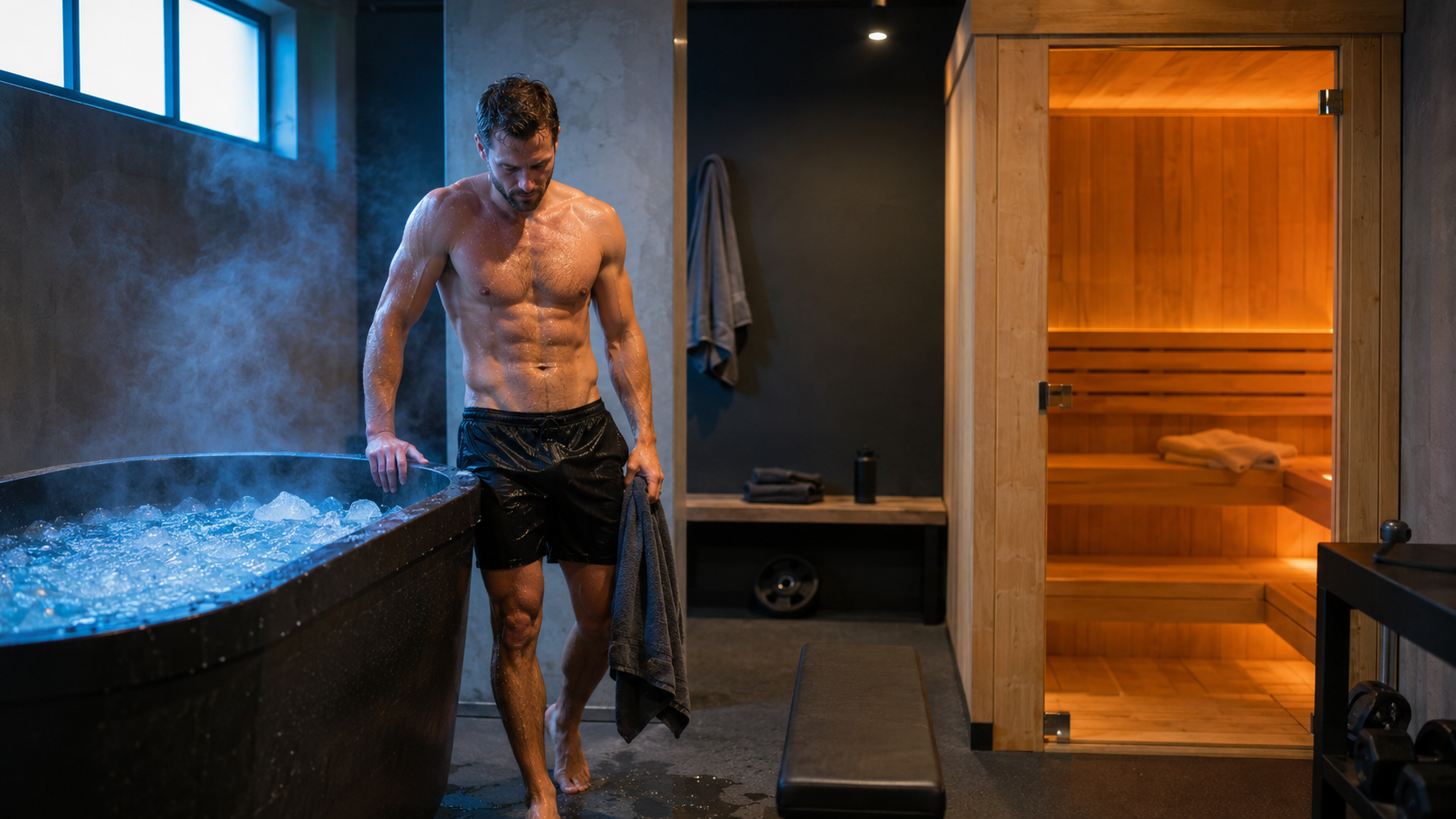
Cold, Heat, and the Truth About Temperature for Recovery
Few recovery trends have caught fire quite like temperature. Step into any serious gym, athletic facility, or wellness center and you will find ice baths and saunas sitting side by side, each promising faster recovery, less soreness, and better performance. Athletes swear by the morning plunge, and influencers film themselves gasping in tubs of ice water. But beneath the hype lies a more interesting and more useful truth: cold and heat do genuinely different things to the body, the evidence for each is uneven, and the right choice depends entirely on what you are training for. Used wisely, temperature is a real recovery tool. Used blindly, it can quietly work against your own goals.
Start with cold, the more fashionable of the two. When you immerse your body in cold water, your blood vessels constrict, blood is pushed away from the limbs toward the core, and the metabolic activity of tissues slows. The intended payoff is reduced inflammation and less muscle soreness after hard exercise. And on the soreness front, the evidence is reasonably supportive: cold water immersion does appear to reduce the perception of muscle soreness in the hours and day after a tough session, and reviews tend to find it at least as good as resting passively. This is precisely why cold therapy is so popular in tournament settings, where an athlete competes again the next day and the only goal is to feel fresh fast, regardless of long-term adaptation.
But here is the crucial catch that the ice-bath enthusiasts rarely mention, and it is the single most important thing to understand about cold. The same anti-inflammatory effect that soothes soreness can also blunt the muscle-building response to strength training. A consistent body of research, including controlled studies and meta-analyses, shows that regularly plunging into cold water immediately after resistance training attenuates gains in muscle size and strength over the following weeks and months. The cold appears to dampen the very signalling cascade that tells muscles to grow and adapt. The practical lesson is sharp: if your goal is building muscle or strength, do not jump into an ice bath right after lifting. You may feel better that evening while slowly sabotaging your progress. Cold is a recovery aid, not a growth aid, and the timing matters enormously.
Heat works in almost the opposite direction. A sauna, or any sustained heat exposure, dilates blood vessels, increases circulation, raises heart rate in a way that gently mimics light cardiovascular exercise, and relaxes muscles. Rather than suppressing the body’s stress response, heat adds a mild, beneficial stress that the body adapts to over time. The evidence here points in some genuinely promising directions, particularly for endurance athletes, where post-exercise sauna use has been linked to improvements in endurance performance, likely through adaptations like increased blood plasma volume. Heat also does not appear to carry cold’s penalty for muscle growth, making it a friendlier option for people lifting weights. And beyond sport, regular sauna bathing is associated with broad cardiovascular and relaxation benefits that have nothing to do with training at all.
Then there is the middle path, contrast therapy, which alternates between hot and cold in deliberate cycles, typically a minute or so of heat followed by a minute of cold, repeated for a quarter of an hour or so. The theory is that the repeated dilation and constriction of blood vessels acts like a pump, flushing the muscles and accelerating recovery, while combining the relaxation of heat with the invigoration of cold. The research on contrast therapy is encouraging for short-term recovery and soreness, comparable to other active recovery methods, and many people find the experience itself uniquely refreshing. It has become the centerpiece of the modern sauna-and-plunge wellness ritual for good reason.
So how should a thoughtful person actually use all this? The answer flows directly from your goal, and getting it right matters more than the specific temperatures or durations. If you are chasing muscle and strength, treat cold with caution and save any ice baths for rest days or well away from your lifting sessions; lean on heat and gentle movement instead. If you are an endurance athlete or simply want general recovery and relaxation, both heat and contrast therapy are excellent allies with little downside. And if you are an athlete who must perform again within twenty-four hours, cold immersion is a legitimate tool for rapid same-day recovery, the long-term adaptation question being irrelevant when the next event is tomorrow morning. The recurring theme in the science is that there is no single best temperature, only the best temperature for a particular purpose.
A few practical and safety notes round this out, because both extremes are genuine physiological stressors, not spa novelties. Start gently, with short exposures at tolerable temperatures, and build up gradually as your body adapts rather than diving into the most extreme version on day one. Hydrate well around sauna sessions, since you lose a meaningful amount of fluid through sweat. And recognize that these practices are not for everyone. People with heart conditions, high or unstable blood pressure, who are pregnant, or who have other medical concerns should treat cold plunges and hot saunas with real care and check with a doctor first, because the cardiovascular swings involved are significant.
Stripped of the marketing, temperature for recovery comes down to a simple, almost elegant principle. Cold calms the body down and dulls the alarm of inflammation, which is wonderful when you just need to feel ready, and counterproductive when you want your muscles to respond and grow. Heat ramps the body up in a mild, adaptive way that complements training rather than fighting it. Contrast splits the difference and feels fantastic. None of it is magic, and none of it replaces the true foundations of recovery, which remain sleep, nutrition, and sensible training. But matched honestly to your goals, the hot and the cold are real, accessible tools, two opposite forces you can finally use on purpose rather than on faith.